
When whistleblowing becomes a governance issue, what changes?


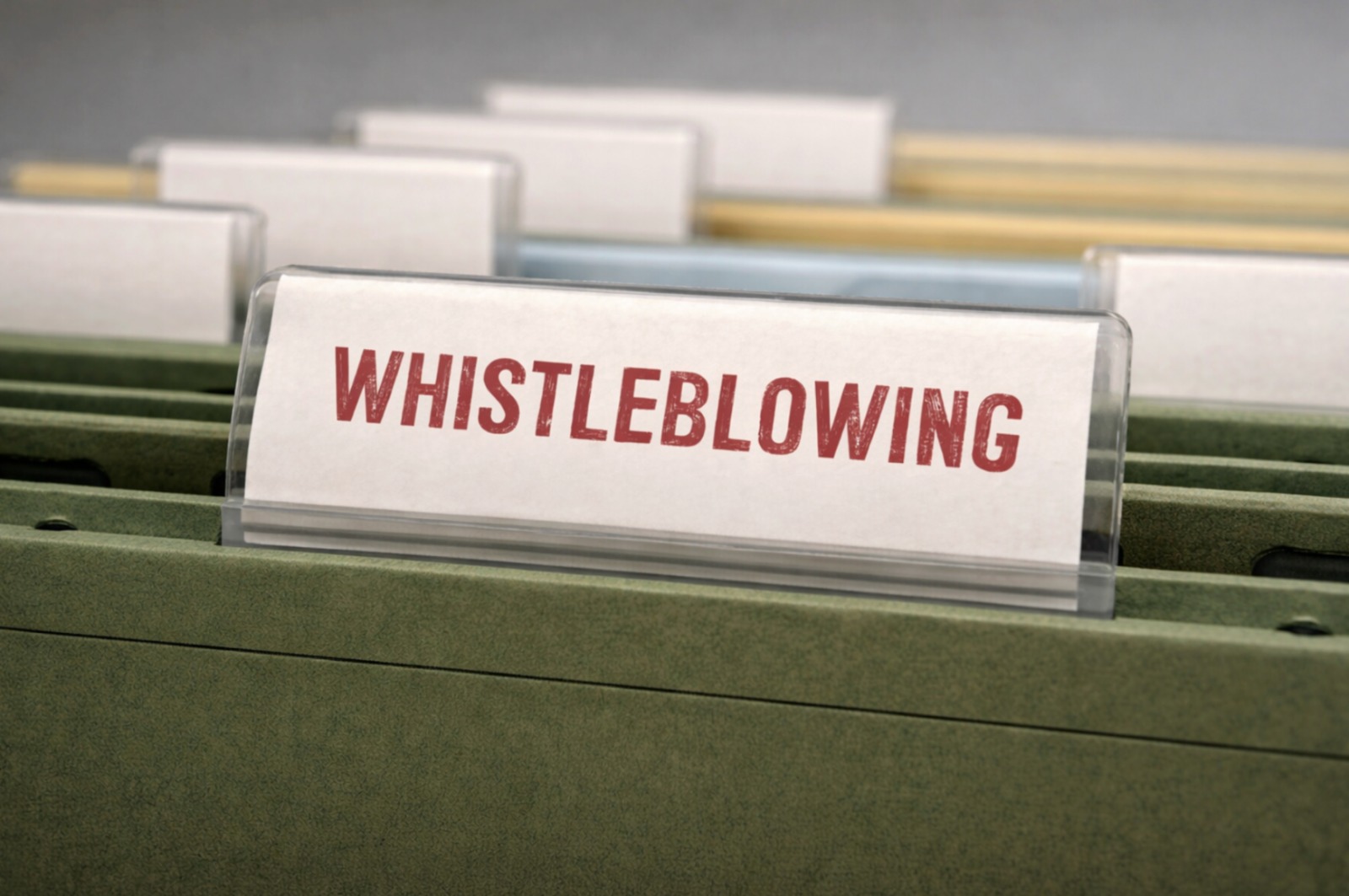
Many organisations initially treat whistleblowing as a policy and culture matter. It typically sits within HR, legal, or compliance. The primary objective is to provide a reporting route, communicate it, and encourage uptake.
Over time, the framing often changes. Questions move beyond whether a channel exists, and towards whether the organisation can evidence that the mechanism is credible, consistent, and appropriately governed. At that point, whistleblowing becomes a governance issue.
Go deeper: Whistleblowing and integrity regulations in APAC. Managing risks while building a stronger workplace examines why this shift is becoming more pronounced across the region, particularly for organisations operating across multiple jurisdictions.
{{wb-webinar-whistleblowing-and-integrity-regulations-in-apac="/components"}}
Governance changes the standard of scrutiny
A culture-led view of whistleblowing tends to focus on awareness and confidence, whether employees know how to raise concerns and believe they will be treated fairly. A governance-led view adds a different set of expectations.
It asks whether accountability is clearly defined, whether conflicts of interest are designed out of the process, and whether the organisation can demonstrate timely, consistent handling of cases. It also asks whether leadership and the board have sufficient visibility to exercise oversight without compromising confidentiality.
In practical terms, a governance lens expects evidence. Not only a policy, but traceability of decisions, appropriate controls, and a defensible operating model.
Governance brings power dynamics into focus
Whistleblowing is inherently linked to power. Concerns often relate to seniority, influence, or the misuse of authority. Even well-intentioned programmes can be weakened by structural bias, particularly when case intake, triage, and escalation are not sufficiently independent.
As whistleblowing becomes governance, organisations tend to revisit questions such as:
- Who has authority to triage, classify, and escalate cases?
- How are conflicts managed when reports involve senior stakeholders?
- What access controls govern who can view sensitive case information?
- What safeguards exist to reduce undue influence, whether explicit or subtle?
These questions are not theoretical. They reflect the reality that credibility is shaped by outcomes and process integrity, not policy statements.
“Anonymous” becomes less important than “defensible”
An anonymous channel can reduce perceived identity risk. It does not, on its own, create a trusted mechanism. A governance lens focuses on whether the end-to-end process is reliable.
That includes whether confidentiality is protected in practice, whether the process is predictable and fair, and whether there is an auditable record of key decisions and actions. In other words, governance shifts attention from the form of reporting to the integrity of case handling.
Cross-border operations amplify inconsistency
For many organisations in APAC, whistleblowing programmes operate across jurisdictions with different legal expectations, cultural norms, and levels of organisational maturity. Under a governance lens, variability becomes more visible, and often less acceptable.
Common challenges include differences in response times by market, inconsistent investigation standards, uneven record-keeping, uncertainty regarding data access, and ambiguity over case ownership. Governance does not require identical execution across countries, but it does require consistency where it matters, and a rationale for variation that is intentional rather than incidental.
Oversight becomes explicit, including at board level
Once whistleblowing is treated as governance, leadership and boards generally expect structured visibility into the programme. This is not visibility into every case, but visibility into performance of the mechanism, themes and trends, systemic issues, and escalation thresholds.
This shift can strengthen accountability, but it also requires careful handling. Reporting should support oversight and improvement, without turning whistleblowing into a reputational metric that inadvertently discourages reporting or encourages under-classification.
The central governance question is straightforward. What information enables appropriate oversight, while preserving confidentiality and maintaining trust in the mechanism?
A UAE lens makes governance expectations practical
Regulatory developments in specific jurisdictions often accelerate governance maturity because they require operational decisions, not just policy updates. For organisations operating in the UAE, considerations tend to become concrete quickly, including accountability between central and local stakeholders, responsible handling of case information, and alignment of processes with local expectations.
Go deeper: Whistleblowing regulations in the UAE. What’s changed, who’s affected, and what to do now provides a practical lens on what changes operationally when regulatory expectations evolve.
{{wb-webinar-whistleblowing-regulations-in-the-uae="/components"}}
Closing perspective
When whistleblowing becomes a governance issue, the organisation is no longer evaluated on whether it encourages employees to speak up. It is evaluated on whether the system can be relied upon when they do. That requires more than intent. It requires a credible operating model, clear accountability, appropriate controls, and evidence that the mechanism works consistently under real conditions.
{{whistleblowing-cta="/components"}}


.png)
FAQs

This depends on the industry and type of role you are recruiting for. To determine whether you need reference checks, identity checks, bankruptcy checks, civil background checks, credit checks for employment or any of the other background checks we offer, chat to our team of dedicated account managers.
Many industries have compliance-related employment check requirements. And even if your industry doesn’t, remember that your staff have access to assets and data that must be protected. When you employ a new staff member you need to be certain that they have the best interests of your business at heart. Carrying out comprehensive background checking helps mitigate risk and ensures a safer hiring decision.
Again, this depends on the type of checks you need. Simple identity checks can be carried out in as little as a few hours but a worldwide criminal background check for instance might take several weeks. A simple pre-employment check package takes around a week. Our account managers are specialists and can provide detailed information into which checks you need and how long they will take.
All Veremark checks are carried out online and digitally. This eliminates the need to collect, store and manage paper documents and information making the process faster, more efficient and ensures complete safety of candidate data and documents.
In a competitive marketplace, making the right hiring decisions is key to the success of your company. Employment background checks enables you to understand more about your candidates before making crucial decisions which can have either beneficial or catastrophic effects on your business.
Background checks not only provide useful insights into a candidate’s work history, skills and education, but they can also offer richer detail into someone’s personality and character traits. This gives you a huge advantage when considering who to hire. Background checking also ensures that candidates are legally allowed to carry out certain roles, failed criminal and credit checks could prevent them from working with vulnerable people or in a financial function.
Trusted by the world's best workplaces


APPROVED BY INDUSTRY EXPERTS
.png)
.png)


and Loved by reviewers


Transform your hiring process
Request a discovery session with one of our background screening experts today.