
Trust has become the most measurable and most fragile asset in hiring


Just recently, a cybersecurity firm hired what they thought was a talented Russian software engineer named Ivan. He passed four video interviews, sailed through background checks, and had all the right credentials.
The problem? Ivan wasn't real. He was a deepfake. A scammer using AI-generated video and audio to fake his way into a remote position. The company only discovered the fraud after suspicious activity started coming from his account.
Everyone's asking the wrong question
Right now, companies are racing to adopt AI in hiring. They're automating CV screening, using algorithms to rank candidates, and accelerating time-to-hire. The focus is singular: How do we use AI to hire faster?
But here's the question almost no one is asking: How do we build trust infrastructure when AI makes deception this easy?
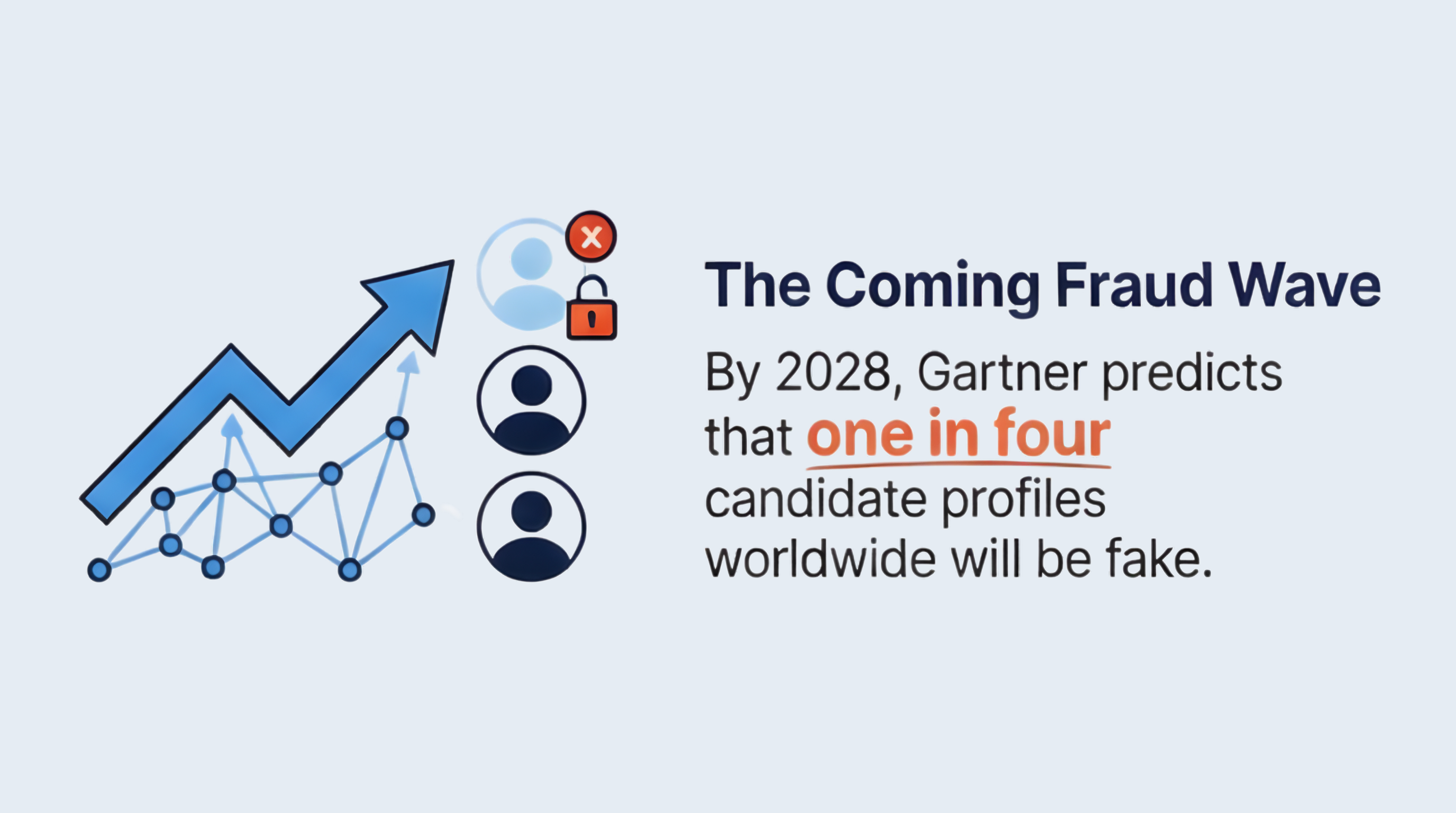
According to recent research, Gartner predicts that by 2028, one in four candidate profiles worldwide will be fake, with 17% of 1,000 U.S. hiring managers surveyed reporting encounters with them.
The same technology companies are using to accelerate hiring is the technology fraudsters are using to accelerate fraud.
As Daniel Callaghan, CEO of Veremark, observes: "As technology evolves, so do the risks. AI-generated CVs, deepfake identities, falsified credentials, and increasingly complex global regulations have made background screening far more challenging and higher risk for in-house HR teams."
The trust crisis you don't see yet
The numbers tell a story most companies aren't paying attention to:
AI is making fraud easier at scale. In one study, when a security firm posted a single job opening, they received over 800 applications in days. When they analysed 300 candidate profiles, over one-third were fraudulent. These weren't just embellished CVs. They were entirely fabricated identities using AI-generated credentials, manipulated work histories, and deepfake technology.
The tactics are evolving fast. Deepfake candidates are showing up in live video interviews with real-time face and voice cloning. A startup recently posted a viral video of an interview with a fake candidate who refused to put their hand in front of their face because it would expose the AI filter.
The motives vary, but the damage is real. Some fraudsters are simply collecting salaries they didn't earn. Others are building paper trails for visa applications or financial fraud. The most dangerous cases involve gaining access to internal systems, customer data, and intellectual property. What looks like a hiring mistake becomes a full-scale security breach.
What's actually broken: the "set and forget" mentality
Here's what most companies are doing: They run a background check at hire. They verify credentials at the point of offer. Then they move on.
This worked when fraud was manual and slow. It doesn't work when AI can generate synthetic identities in minutes.
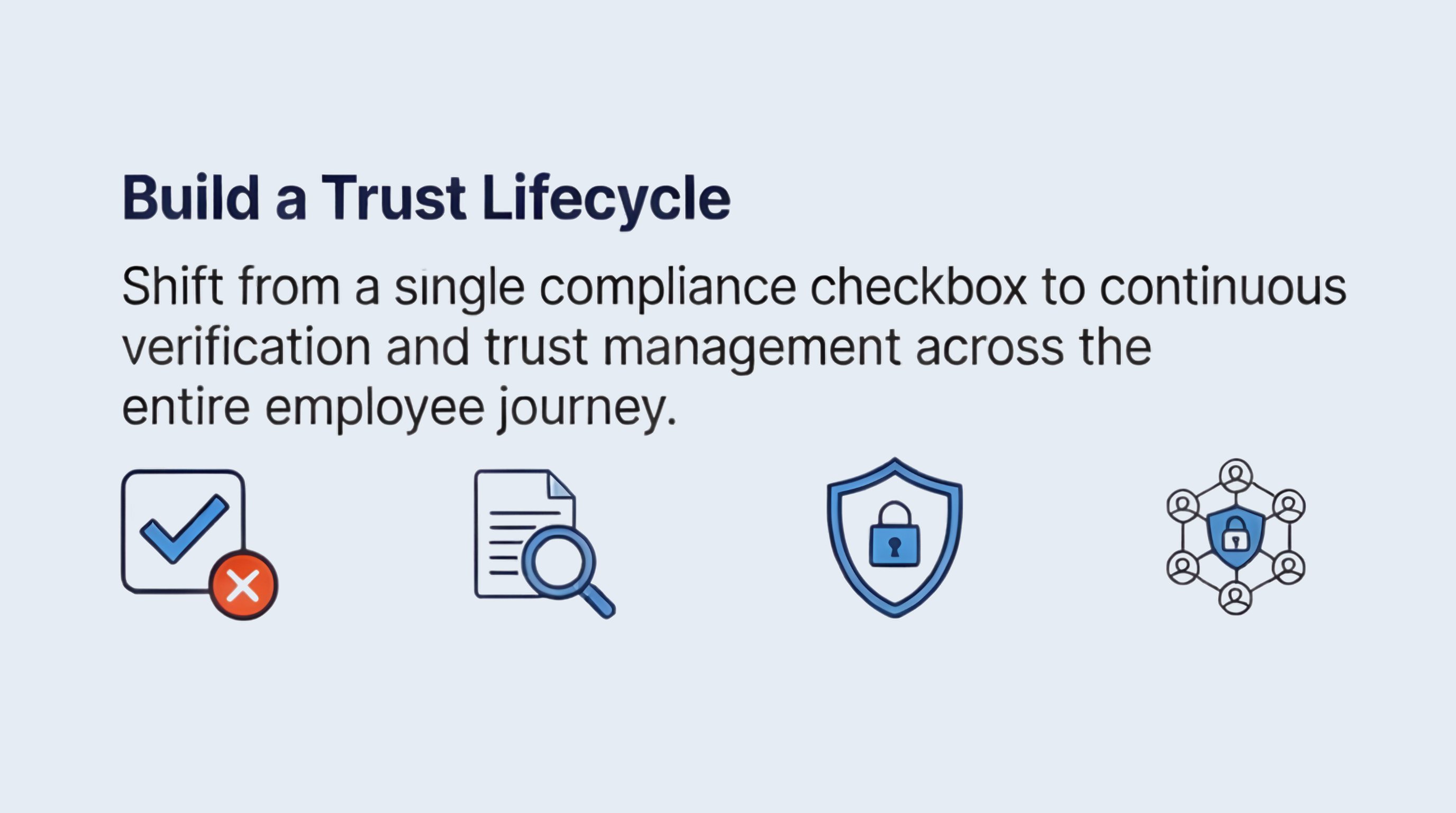
The old model was reactive. Tick-box compliance designed to catch red flags at a single moment in time. But workplace trust isn't a moment. It's a lifecycle.
"Common internal screening mistakes include inconsistent application of checks, reliance on outdated documentation, incomplete verification, and poor record-keeping," notes Callaghan. "Manual processes increase the risk of bias, oversight, and non-compliance, particularly during periods of high hiring volume or regulatory change."
Think about it: You verify someone's identity and credentials before they join. But what about the employee who raises a concern about a colleague's behaviour six months later? Or the contractor whose circumstances change? Or the former employee whose verified credentials you'd want to share with their next employer?
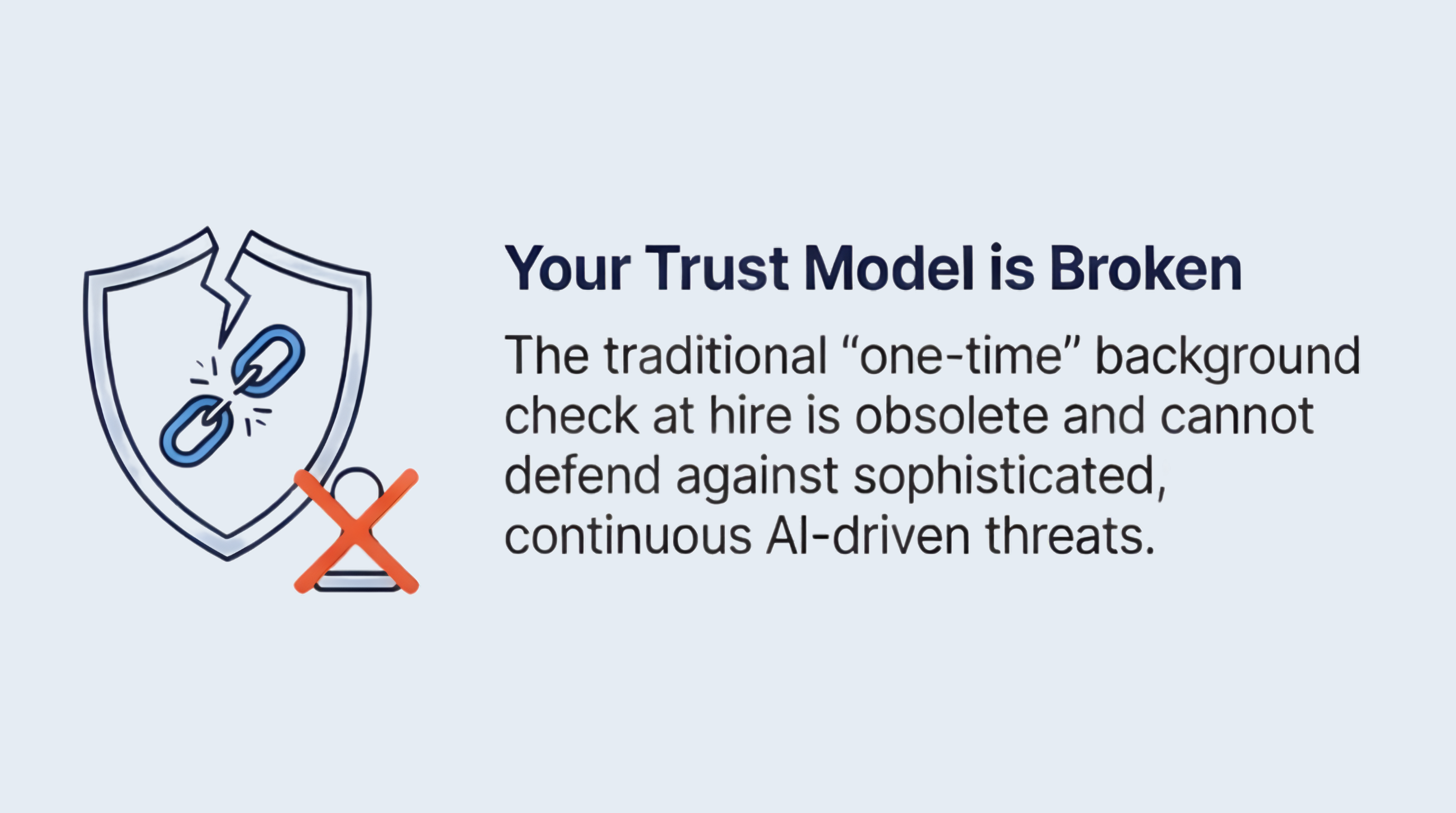
The problem isn't just that AI is making fraud easier. It's that companies are still treating trust as a gate at hire, not as infrastructure across the entire employee journey.
The real cost of getting this wrong
The financial impact of a bad hire is well-documented. The U.S. Department of Labor estimates that a bad hire costs up to 30% of an employee's first-year earnings. For an $80,000 salary, that's a $24,000 loss before you factor in lost productivity, team morale damage, and the cost of rehiring.
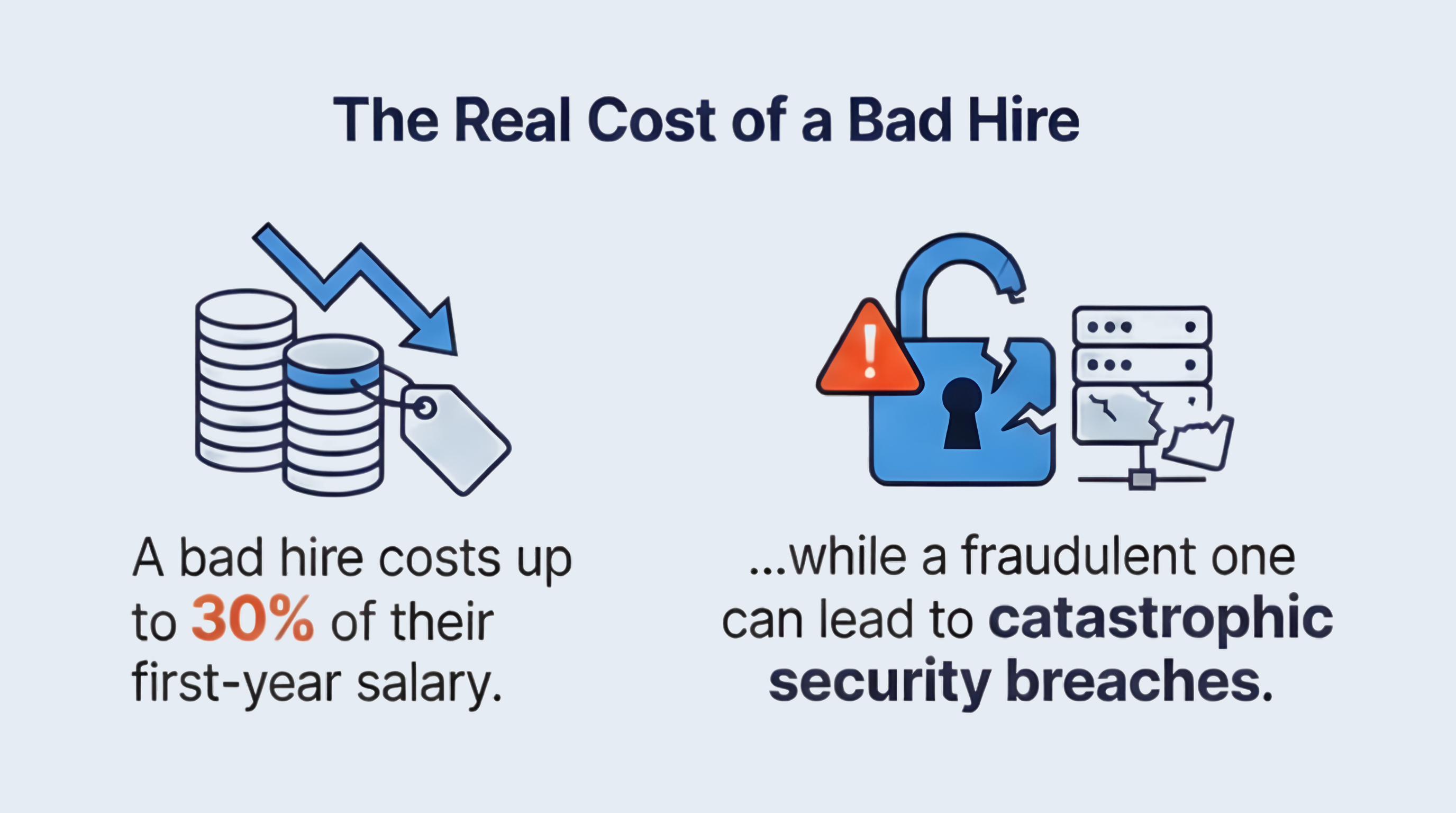
But when that "bad hire" is actually a fraudster with access to your systems? The numbers change dramatically. Companies have lost hundreds of thousands of dollars to deepfake-driven fraud schemes. One cybersecurity firm hired a North Korean hacker under a stolen identity who started installing malware once he had access.
And then there's the trust erosion already happening inside organisations. The crisis that has nothing to do with AI fraud, but everything to do with how companies approach trust.
According to Gallup's 2025 State of the Global Workplace report, only 33% of U.S. workers are engaged, with stress levels near record highs. That disengagement translated into $438 billion in lost productivity in 2024 alone. The 2025 Edelman Trust Barometer revealed that only 75% of workers globally believe their organisations "do the right thing," a 3-point drop from previous years.
Trust in leadership is faltering. Only 32% of employees trust their leaders to make the right decisions, and just 29% trust their managers. When you combine a trust crisis inside your organisation with a verification crisis at your hiring gate, you get a vulnerability most companies aren't prepared for.
The shift that's actually needed
The companies that will win aren't the ones that move fastest. They're the ones that build trust infrastructure whilst everyone else is just building speed.
This shift requires rethinking verification itself:
- From one-time checks to continuous verification. A background check at hire captures a moment in time. But people's circumstances change, behaviours evolve, and risks surface throughout employment.
- From compliance checkboxes to trust lifecycle management. Treating verification as a regulatory requirement misses the point. Trust needs to be built, measured, and protected across every stage of the employee journey.
- From reactive red flags to proactive trust signals. Waiting for problems to surface means you're already too late. Forward-looking organisations are building systems that surface patterns and provide early indicators.
- From isolated data points to connected trust intelligence. A criminal check here, a reference verification there, an incident report six months later. These data points rarely connect, leaving organisations blind to the full picture.
Like ESG changed how we think about sustainability, workplace trust is changing how we think about people integrity. It's no longer enough to verify someone's background when they join and hope for the best. Changing expectations from communities, governments, investors and employees mean corporations need to be more open, transparent, fair and ethical throughout the employee lifecycle, from hire to exit.
Companies that focus on people performance are 4.2 times more likely to outperform their peers, with approximately 30% higher revenue growth and 5 percentage points lower attrition. Toxic culture is the strongest predictor of attrition, 10 times more than pay, directly linking culture and trust to retention.
How background screening evolves to meet this moment
Traditional background screening was designed for a different era. Run a criminal check, verify employment history, confirm credentials, tick the box. The process assumed that people were who they claimed to be, that fraud was manual and detectable, and that a point-in-time verification was sufficient.
That model is breaking.
"Specialist screening providers are built to stay ahead of these threats," explains Callaghan. "Operating at scale, they combine purpose-built technology with expert human oversight to verify identity, employment history, and qualifications accurately, securely, and quickly. Their systems are continuously updated to reflect changing legislation, data protection requirements, and industry standards—something most internal teams simply don't have the time or resources to manage alone."
Modern background screening needs to address three interconnected challenges that the AI era has exposed:
First, verification depth matters more than ever.
When deepfake technology can generate convincing video, audio, and credentials in minutes, surface-level checks are insufficient. Background screening now requires multi-layered verification that goes beyond confirming what's on a CV. This includes social media analysis to spot synthetic profiles, location verification to ensure candidates are where they claim to be, and behavioural pattern analysis to identify inconsistencies that signal fraud.
Second, timing is more complex than a single gate.
The old model treated background screening as something that happens before someone joins. But in practice, trust needs to be verified, protected, and re-assessed throughout the employee lifecycle. This isn't about constantly re-screening people. It's about recognising that the data points gathered at different stages (pre-hire verification, incident reports during employment, exit interviews, credential portability for future roles) should connect to provide a fuller picture of workplace integrity.
Third, the function of background screening is expanding beyond individual verification.
Organisations now need screening systems that serve multiple stakeholders and purposes:
For employers, it's about verification before hire. Did this person actually work where they claim? Do they have the qualifications they listed? Are there red flags in their history?
For employees, it's about protection during tenure. When someone raises a concern about wrongdoing, is there a secure channel to report it? Can that concern be connected to relevant historical data whilst protecting the reporter's identity?
For the broader ecosystem, it's about credential portability. Can verified information travel with individuals across roles and companies in a way that reduces friction whilst maintaining trust?
Background screening providers that understand this evolution aren't just adding more check types. They're building connected systems that work across the entire employee journey. They're combining pre-hire verification with ongoing integrity infrastructure like whistleblower platforms, secure communication channels, and data systems that allow organisations to see patterns before they become problems.
Importantly, modern screening also recognises that candidate experience matters. "Today's candidates expect a smooth, seamless, digital-first experience, even during their background screening," Callaghan points out. "When screening is fast, visible and well communicated it builds trust and protects the organisation whilst delivering a world-class candidate experience that today's talent expects."
This doesn't mean eliminating AI from the hiring process. It means recognising that trust infrastructure needs to be as sophisticated as the technology threatening it.
What this means for leadership
If you're a CHRO, VP of Talent, or Head of Risk, you're navigating a new reality:
The tools that were supposed to make hiring easier are also making fraud easier. The speed gained through AI-powered recruitment is only valuable if you're not automating blind spots. And the trust crisis inside organisations (the disengagement, the turnover, the scepticism of leadership) is being compounded by a verification crisis at the hiring gate.
The question isn't whether to adopt AI in hiring. It's whether you're building the trust infrastructure to support it.
"Outsourcing screening removes administrative friction, reduces legal and compliance exposure, and gives HR teams confidence that checks are robust, auditable, and defensible," notes Callaghan. "The result is a safer, more seamless hiring process that protects the organisation whilst freeing HR to focus on what really matters: building high-performing teams and supporting long-term workforce strategy."
Companies that treat trust as a strategic asset rather than a compliance tick-box are the ones that attract better talent, retain top performers, and protect themselves from the costly mistakes that come from moving fast without verification.
Trust isn't something you build once at hire and forget about. It's something you verify, protect, and maintain across the entire employee journey.
The organisations that understand this distinction won't just avoid the next "Ivan." They'll build workplaces where trust is measurable, portable, and continuously maintained, even as AI makes everything else faster.
{{transform-your-hiring-process="/components"}}
.jpg)


FAQs

This depends on the industry and type of role you are recruiting for. To determine whether you need reference checks, identity checks, bankruptcy checks, civil background checks, credit checks for employment or any of the other background checks we offer, chat to our team of dedicated account managers.
Many industries have compliance-related employment check requirements. And even if your industry doesn’t, remember that your staff have access to assets and data that must be protected. When you employ a new staff member you need to be certain that they have the best interests of your business at heart. Carrying out comprehensive background checking helps mitigate risk and ensures a safer hiring decision.
Again, this depends on the type of checks you need. Simple identity checks can be carried out in as little as a few hours but a worldwide criminal background check for instance might take several weeks. A simple pre-employment check package takes around a week. Our account managers are specialists and can provide detailed information into which checks you need and how long they will take.
All Veremark checks are carried out online and digitally. This eliminates the need to collect, store and manage paper documents and information making the process faster, more efficient and ensures complete safety of candidate data and documents.
In a competitive marketplace, making the right hiring decisions is key to the success of your company. Employment background checks enables you to understand more about your candidates before making crucial decisions which can have either beneficial or catastrophic effects on your business.
Background checks not only provide useful insights into a candidate’s work history, skills and education, but they can also offer richer detail into someone’s personality and character traits. This gives you a huge advantage when considering who to hire. Background checking also ensures that candidates are legally allowed to carry out certain roles, failed criminal and credit checks could prevent them from working with vulnerable people or in a financial function.
Trusted by the world's best workplaces



APPROVED BY INDUSTRY EXPERTS
.png)
.png)


and Loved by reviewers


Transform your hiring process
Request a discovery session with one of our background screening experts today.