
A whistleblowing channel Is a care tool in Aged Care


In aged care, the issues that damage trust rarely arrive as one dramatic incident. They build up through repeated breakdowns that start to feel routine. A room not cleaned properly. A staff member who speaks sharply to a resident's family. Medication that's late, or given at the wrong dose. Each item looks manageable on its own. The risk is what happens when those signals sit in different places, with different owners, and no shared view of what they add up to.
This is a common pattern across the sector. HR keeps a spreadsheet of staff issues. Quality and compliance keep another. Sites maintain their own lists. Home care teams track concerns one way, residential teams track them another. Policies diverge between sites because they were introduced at different points, and nobody ever pulled them back into a shared operating model. The organisation has "data," but it can't learn fast enough across teams and locations.
Learn more about Veremark's Whistleblowing Hotline
When trust drops, reporting stops
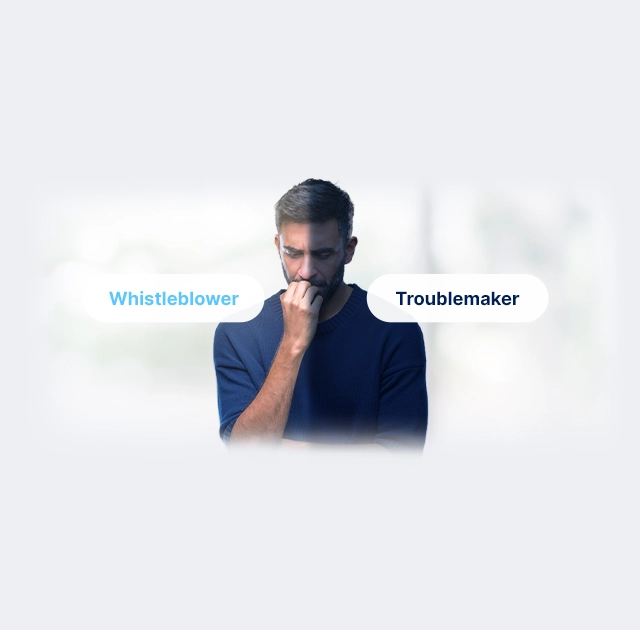
When staff lose confidence that raising issues leads to change, they stop escalating. They assume nothing will improve, or they don't want to be labelled as difficult. Concerns stay in local spreadsheets, or the spreadsheets stop being updated because the list has become too long and too politically risky. Leaders end up seeing only what makes it into formal reporting, while the bigger set of issues sits below the surface.
Leadership tone accelerates this. If senior leaders start framing residents and families as unreasonable, staff notice and adjust. Some follow the tone. Others disengage and keep their heads down. Either way, you lose the signals that would have helped you improve care earlier.
"When staff stop raising small concerns, leadership loses the signals that would have helped them improve care before it was too late." David Morgan, Managing Director, Veremark Whistleblower Technology Solutions, Veremark
In one case Veremark's David Morgan worked on directly, this is exactly what happened. A growing provider with siloed systems appointed a CEO who dismissed escalating concerns from residents and families. Staff followed her lead or went quiet. Reporting died, and the organisation lost its ability to see itself clearly. The full story, and what it reveals about the regulatory environment, is in his recent article for Inside Ageing.
A whistleblowing channel matters here because it gives staff, residents and families a safe route to surface concerns when normal pathways feel blocked. It gives leadership a clearer view of patterns that are easy to miss when information is fragmented. And it creates a record that connects individual concerns into a picture the board can act on.
Connecting signals to action
Many risks in aged care show up as patterns, not single events. If you can connect complaints, incidents and speak-up reports into one view, you start to see things that fragmented tracking hides: repeat issues across sites, training that isn't landing, supervision gaps that keep producing the same failures.
A speak-up channel gives leaders the same early visibility that the regulator is now building for itself. It helps teams route concerns to the right owners, follow up with clarity and keep a defensible record of actions taken. It reduces your reliance on informal conversations and local workarounds, which is where issues most often get lost.
Learn more about Veremark's Whistleblowing Hotline
The Aged Care regulator is getting smarter. Providers need to keep pace.
.png)
The strengthened Aged Care Quality Standards (effective 1 November 2025) place explicit expectations on providers around complaints handling, incident management and governance systems that support timely action, tracking and learning. The new Aged Care Act reinforces this with stronger enforcement powers, personal liability for directors and officers, and clearer obligations around continuous improvement.
The Commission itself has changed. It now cross-references complaints, incidents, staffing and financial data with external intelligence to build provider-level risk profiles. As David Morgan has observed, "the regulator's view of your organisation is now more detailed and more current than your own." If there's a pattern forming in your organisation, the Commission may spot it before your board does.
Providers who wait for the regulator to surface their issues are taking an expensive risk. Providers who invest in their own visibility will be in a far stronger position.
Governance is an investment in aged care
The providers who manage this transition well will be the ones who treat governance spending as productive, not protective. That means three things.
First, integrated systems. Whistleblowing, complaints and incidents feeding into one view, with clear ownership, documented follow-through and regular reporting to the board. Not spreadsheets held by different teams at different sites.
Second, proper screening. The quality of care starts with the quality of hiring, from frontline staff through to the CEO. A bad leadership appointment can set back an entire organisation's culture, as the case study in David Morgan's article demonstrates. Due diligence at the point of hire is one of the lowest-cost, highest-return governance investments a provider can make.
Third, real training. Capability that builds confidence in handling disclosures and managing concerns, not tick-box awareness sessions delivered once and forgotten.
Providers who make these investments will learn more from their own issues, fix problems while they're still small and build organisations where staff, residents and families trust that raising concerns leads to change.
A question for your next executive meeting
Where do concerns live today across your organisation, and how quickly can you connect them into one view that leads to action?
If the honest answer is "in a few spreadsheets, across a few teams," you already know what needs to change.
For more on this topic, read Veremark's report: Whistleblowing in the New Aged Care Framework. For David Morgan's view on how the regulator's changing capabilities affect providers, read The Regulator Has Changed. Most Providers Haven't Noticed Yet.
Learn more about Veremark's Whistleblowing Hotline

Read More


.png)

.png)
FAQs

This depends on the industry and type of role you are recruiting for. To determine whether you need reference checks, identity checks, bankruptcy checks, civil background checks, credit checks for employment or any of the other background checks we offer, chat to our team of dedicated account managers.
Many industries have compliance-related employment check requirements. And even if your industry doesn’t, remember that your staff have access to assets and data that must be protected. When you employ a new staff member you need to be certain that they have the best interests of your business at heart. Carrying out comprehensive background checking helps mitigate risk and ensures a safer hiring decision.
Again, this depends on the type of checks you need. Simple identity checks can be carried out in as little as a few hours but a worldwide criminal background check for instance might take several weeks. A simple pre-employment check package takes around a week. Our account managers are specialists and can provide detailed information into which checks you need and how long they will take.
All Veremark checks are carried out online and digitally. This eliminates the need to collect, store and manage paper documents and information making the process faster, more efficient and ensures complete safety of candidate data and documents.
In a competitive marketplace, making the right hiring decisions is key to the success of your company. Employment background checks enables you to understand more about your candidates before making crucial decisions which can have either beneficial or catastrophic effects on your business.
Background checks not only provide useful insights into a candidate’s work history, skills and education, but they can also offer richer detail into someone’s personality and character traits. This gives you a huge advantage when considering who to hire. Background checking also ensures that candidates are legally allowed to carry out certain roles, failed criminal and credit checks could prevent them from working with vulnerable people or in a financial function.
Trusted by the world's best workplaces


APPROVED BY INDUSTRY EXPERTS
.png)
.png)


and Loved by reviewers


Transform your hiring process
Request a discovery session with one of our background screening experts today.



.png)