
UK employee reference checks: compliant, fast, and accurate


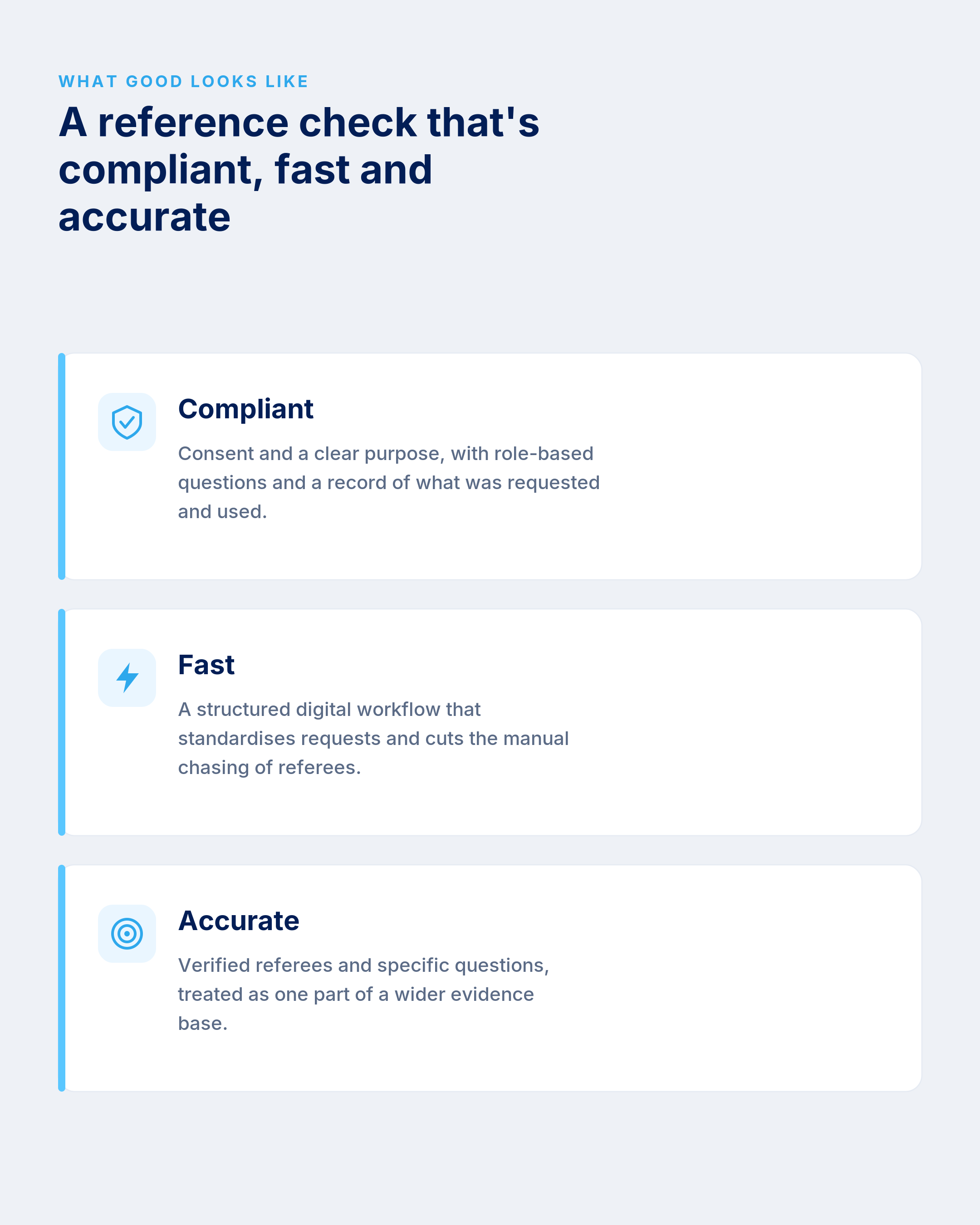
A poor reference process slows hiring down and gives employers false confidence. A good one confirms what matters, treats candidates fairly and gives hiring teams evidence they can use.
That is the standard every UK employee reference check should meet.
Reference checks often sit near the end of the hiring process, after interviews, assessments and salary discussions. By that point, everyone wants to move quickly. The risk is that speed turns into shortcuts: vague emails, inconsistent questions, missing consent, patchy records and little clarity on what the reference actually proves.
For UK employers, the answer is not to ask more questions. It is to ask the right questions, in the right way, with a clear record of what was requested, received and used.
What UK employers can ask for in a reference check
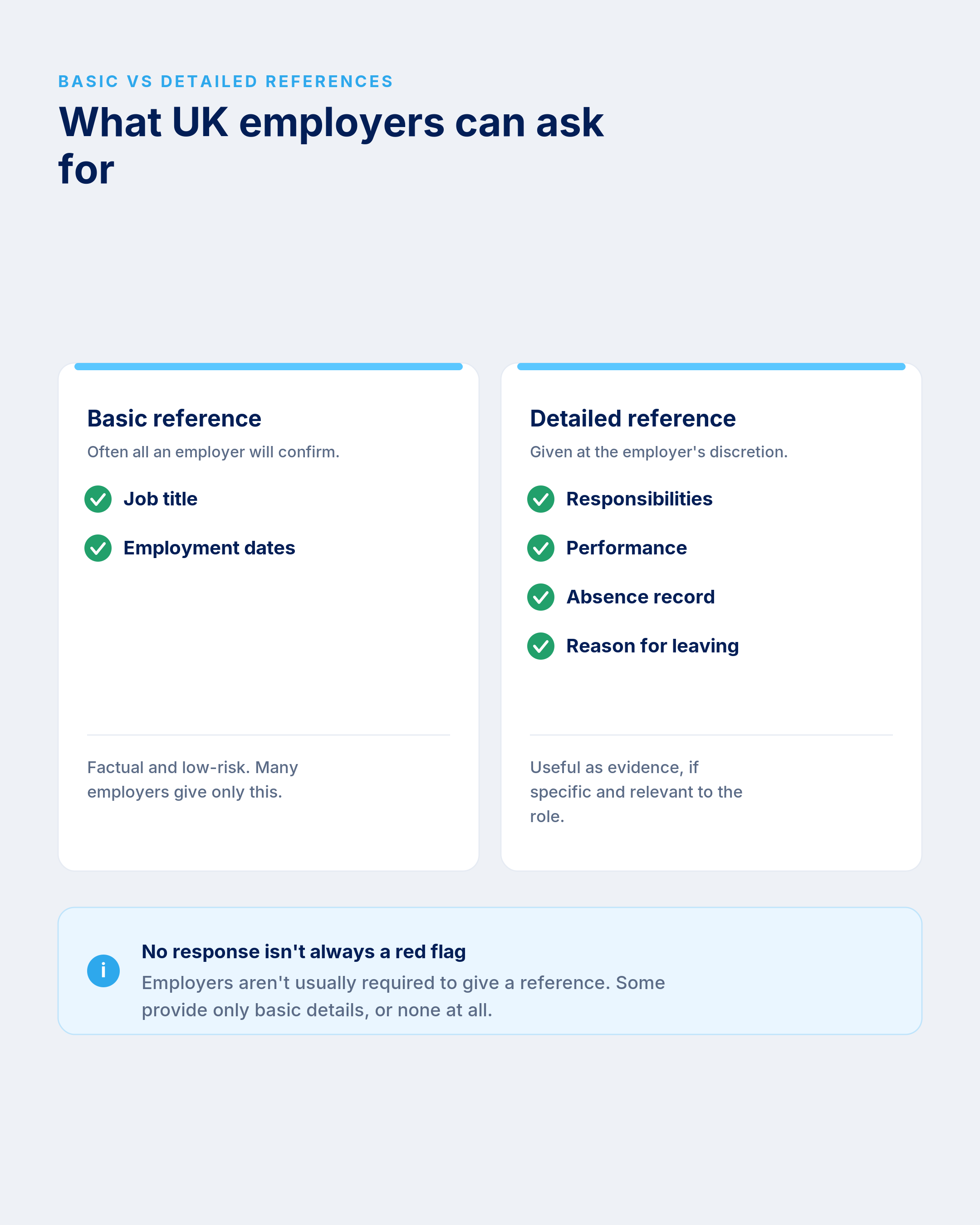
A work reference usually comes from a current or previous employer. It may be basic, confirming job title and employment dates, or more detailed, covering areas such as responsibilities, performance, absence record or reason for leaving. ACAS describes both basic and detailed references, with factual references often limited to role and dates.
Employers are not usually required to provide a reference. Where they do provide one, it must be fair and accurate. GOV.UK also notes that a reference may be required where there is a written agreement or in certain regulated industries, such as financial services.
That creates two practical points for hiring teams.
First, no response does not always mean there is a problem with the candidate. Some employers have a policy of providing only basic references, while others may decline to provide one at all.
Second, a detailed reference should be treated as evidence, not gossip. If a referee gives a concern, the hiring team should consider whether it is relevant to the role, whether it is specific and whether the candidate should have a fair opportunity to respond.
Compliance starts before the request
A compliant UK employee reference check starts with consent and purpose.
The candidate should know what checks are being carried out, why they are needed and how the information will be used. The request should match the role. A senior finance hire may require different checks from a junior operational role. A regulated position may require a tighter process than a role with limited risk exposure.
This is where many employers create problems for themselves. They use a broad template, ask every referee the same questions and collect information they do not need. That makes the process slower and harder to justify.
Veremark’s guide to GDPR compliance in background employment screening makes the same point in a wider screening context: employers should avoid blanket screening policies and consider the role, seniority, access to money, regulatory duties and exposure to sensitive data.
The same logic applies to references. Ask for what you need. Record why you need it. Keep the process consistent.
Speed comes from structure
Reference checks are often slow because they rely on manual chasing. HR sends an email, waits several days, follows up, switches contact details, re-sends forms and then tries to compare answers received in different formats.
A structured process removes much of that friction.
The request should make clear who is asking, what authority they have, what information is being requested and how the referee can respond. It should be easy for the referee to complete and easy for the hiring team to track.
Digital reference checks help because they standardise the workflow. Veremark’s reference check service is designed to reduce the time spent chasing referees while giving employers clearer insight into a candidate’s working style, strengths and potential risks.
That does not mean every reference becomes instant. Some referees will still be slow. Some employers will still provide only basic information. The gain is control: the hiring team can see what has been requested, what has been returned and where action is needed.
Accuracy depends on verification
The value of a reference depends on the source and the question.
A reference from a personal email address, with no confirmation of role or relationship to the candidate, carries limited weight. A reference that only says someone was “excellent” may be positive, but it is not especially useful. A strong process checks that the referee is appropriate and that the response answers the hiring risk.
For many roles, reference checks should sit alongside other screening activity. An employment history check can verify where a candidate worked and when, while references can add context on responsibilities and conduct. Veremark’s employment history checks contact past employers and verify a candidate’s work history, giving employers a firmer basis for hiring decisions.
That distinction matters. A reference is not a full background check. It should not be expected to uncover every issue. It is one part of a wider evidence base.
Veremark’s background checks for employment bring different checks into one digital process, which helps employers match screening to the role and keep hiring moving.
Common mistakes to avoid
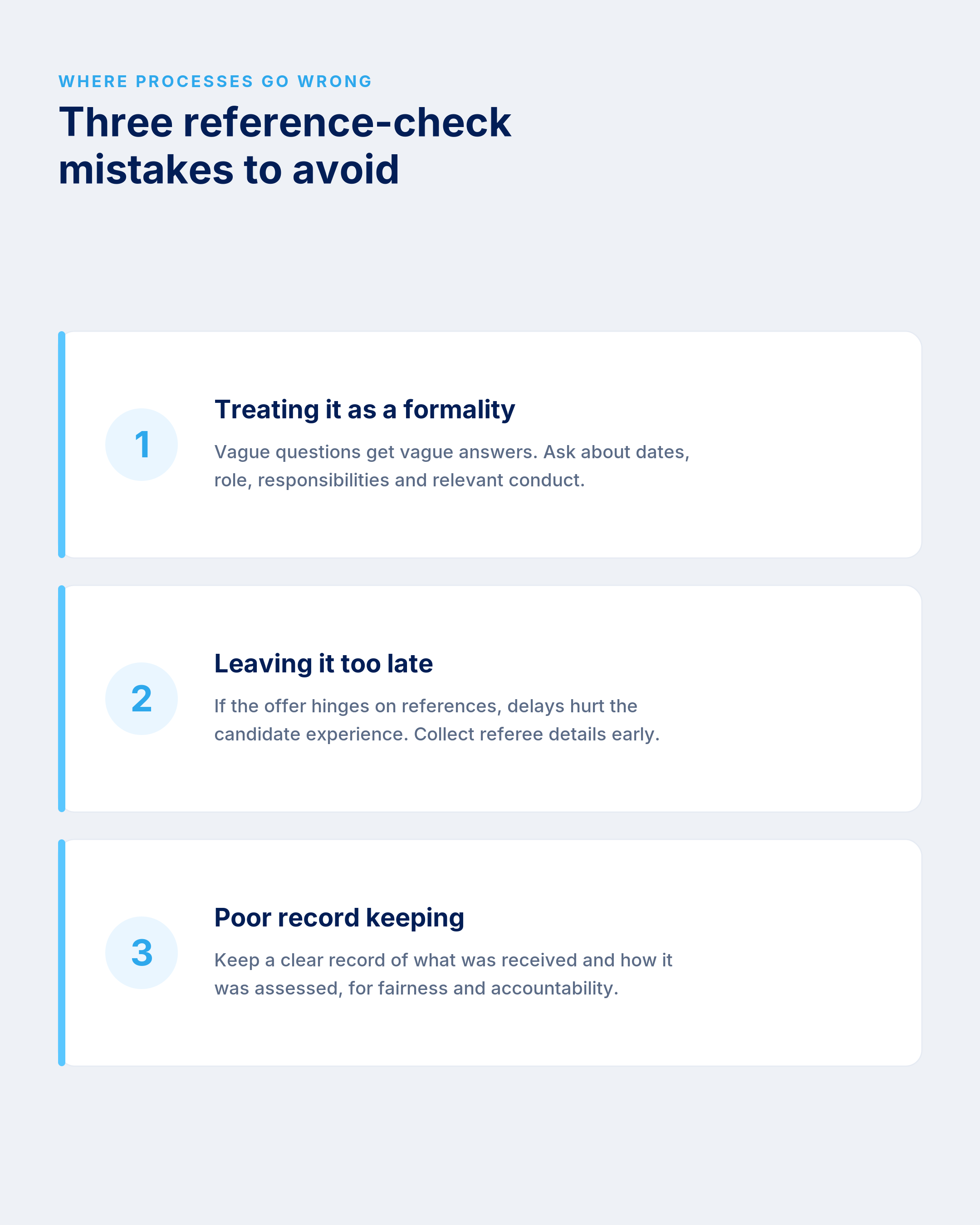
The most common mistake is treating a reference as a formality. When questions are vague, answers tend to be vague. “Would you rehire this person?” may be useful in some contexts, but it should not replace specific questions about dates, role, responsibilities and relevant conduct.
Another mistake is relying on references too late. If the offer depends on them, delays can put the candidate experience at risk. Employers should explain the process early and collect the right referee details before the final stage where possible.
The third mistake is poor record keeping. A hiring decision based partly on reference information should be supported by a clear record of what was received and how it was assessed. That matters for fairness, consistency and internal accountability.
A better reference check process
A good employee reference check is targeted, documented and proportionate. It confirms the basics, asks relevant questions and gives the hiring team information they can defend.
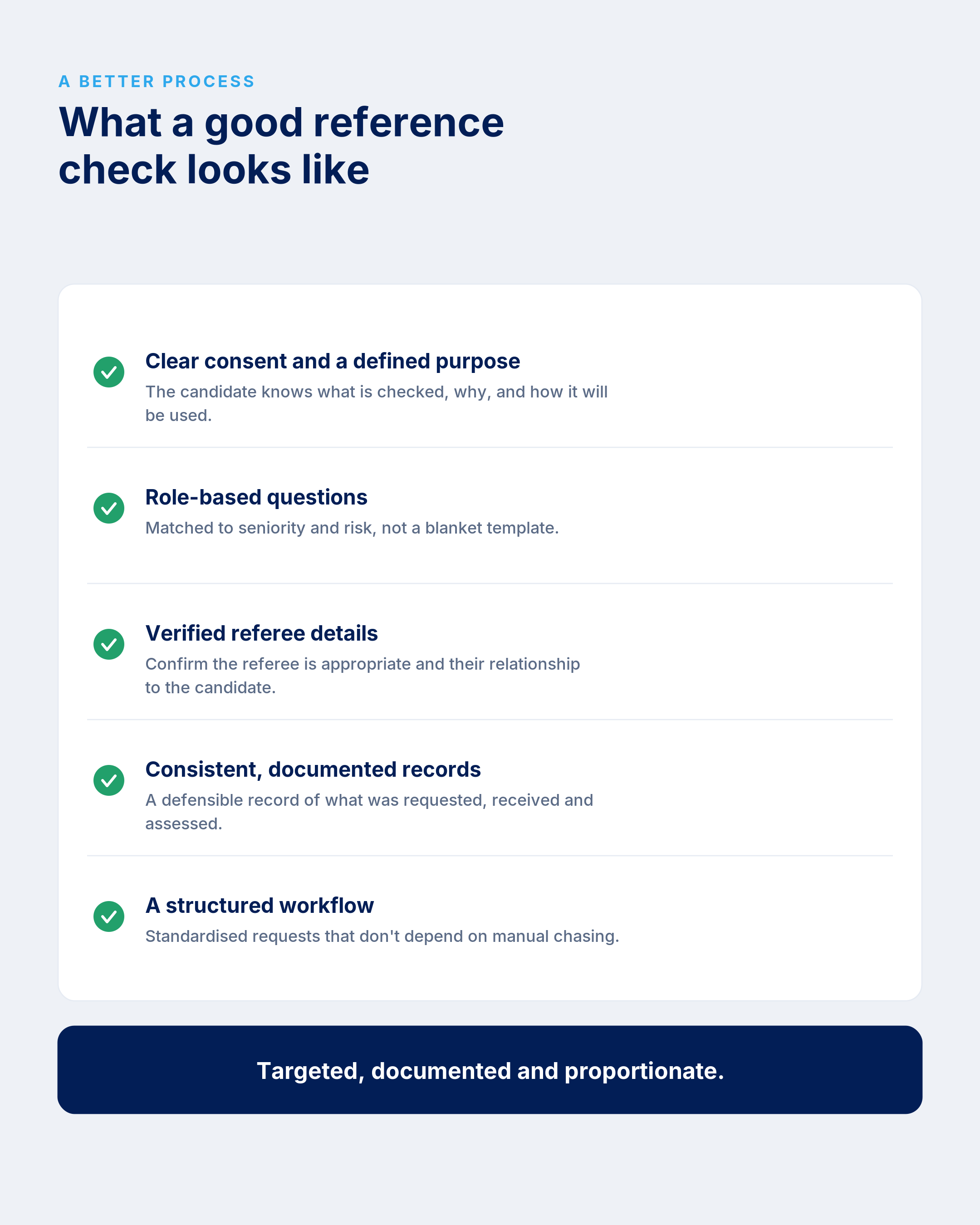
For UK employers, the aim should be simple: reduce delay without weakening the standard of evidence. That means clear consent, role-based questions, verified referee details, consistent records and a process that does not depend on manual chasing.
References still matter. They give employers information that interviews rarely provide. The difference is in how they are run. A fast uk employee reference check should never be a rushed one. The best process protects the candidate, the employer and the hiring decision.
Order your reference checks online today, or book a demo with our account management team
Read More


.png)


.webp)
FAQs

As a general rule, non-British and non-Irish citizens need a work visa (also known as a work permit) to work in the UK.
Yes, Veremark specialises in providing comprehensive and compliant background checks that meet all UK legal requirements. Our processes are designed to be thorough, ensuring that your business adheres to regulatory standards efficiently.
As of 2024, the cost for a Basic DBS check is £18, a Standard DBS check is £18, and an Enhanced DBS check is £38.
Trusted by the world's best workplaces


APPROVED BY INDUSTRY EXPERTS
.png)
.png)


and Loved by reviewers


Transform your hiring process
Request a discovery session with one of our background screening experts today.